BESTSELLER: Sapa Trekking Adventure - Book Now!
Banh Mi Escape Travel
Phu Quoc

Island Paradise

Phu Quoc: Tropical Island Paradise in Vietnam

Phu Quoc is Vietnam's island gem, located in the Gulf of Thailand near the Cambodian coast. Once a quiet fishing island, it has transformed into a premier beach destination while retaining much of its natural beauty. Half the island is protected national park, home to diverse wildlife and pristine jungle. The coastline features stunning beaches, from the developed Long Beach to secluded Sao Beach. The island is famous for producing Vietnam's best fish sauce and has recently added attractions like Vinpearl Safari and the world's longest cable car.

Google Reviews

4.9
Read all reviews

Recommended trips to Phu Quoc

Small group trips, thoughtful itineraries, quality guides and experiences confirmed by client reviews.

Contact our specialists

We're happy to answer all your questions and help you choose

Banh Mi Escape Travel

Banh Mi Escape Travel

All destinations

+84 966 680 323

info@banh-mi-escape.com

View all contacts

Get inspired

Watch our videos and become part of the adventure.

Weather

Best time to visit: Phu Quoc is warm and lovely all year. The dry season (November-April) brings sunshine, calm clear seas and classic beach weather; the green wet season (May-October) is quieter and better value, with sheltered east-coast beaches staying pleasant even when the west coast sees rain.

Climate: Phu Quoc has a tropical island climate with a dry season (November-April) and a wet season (May-October), when rain is heaviest from July to September. Temperatures stay warm year-round and you'll never need more than light clothing.

Local tip: In the wet season, plan beach time for the bright mornings and favour the sheltered east-coast beaches; the dry season is ideal for snorkelling, diving and island-hopping.

Best months to visit this destination

Best
Good
Off-peak

Weather in Phu Quoc in July

July is one of Phu Quoc's wetter months, warm and lush with heavier afternoon rains - especially on the west coast. The sheltered east-coast beaches like Bai Sao stay calmer; plan beach time for the bright mornings and enjoy quiet, good-value days.

Air temperature

30 °C

Water temperature

29 °C

Where to go in Phu Quoc

Discover the most beautiful places and must-see destinations.

Phu Quoc - Photo 1
1/5
Island Travel Expert

Island Travel Expert

Do not stay only at the resort. Take one boat trip to the southern islands, eat seafood in Ham Ninh, and you will see a completely different side of Phu Quoc.

FAQ & Useful tips

Phu Quoc is one of the best places in Vietnam for a relaxed beach break. It suits travellers who want good resorts, easy island-hopping, slower days by the sea and strong local seafood rather than a trip built around constant sightseeing.
The most comfortable period is usually November to April, during the dry season. This is when you are most likely to get sunnier weather, calmer seas and better conditions for beaches, boat trips and snorkelling.
For a first trip, 3 to 4 days is usually ideal. That gives you enough time to enjoy the beach properly, add one island or snorkelling day, and still leave room for seafood dinners and a slower island rhythm.
Phu Quoc works best as a short beach escape or an easy coastal extension to a wider Vietnam itinerary. It is not a destination that needs to be overplanned — the island is strongest when you mix beach time with one or two well-chosen experiences.
There is no single best beach for everyone. Long Beach is the most practical, Ong Lang is a better pick for a quieter stay, and Sao Beach or Khem Beach make more sense if your priority is a prettier southern beach day.
Long Beach is usually the easiest choice for first-time visitors because it is practical, well connected and close to the main resort-and-dining corridor around Duong Dong. It is not always the prettiest beach, but it is often the easiest base.
Ong Lang is one of the better choices if you want a calmer side of Phu Quoc. Vietnamese travel sources repeatedly describe it as more peaceful than the busier main west-coast resort strip.
Yes — if you want a classic bright-sand beach on the south of the island. It makes more sense as a dedicated beach outing than as the most practical base for an entire stay.
For some travellers, yes. Khem Beach is often the better choice if you want a quieter, more polished southern beach feel, while Sao Beach is the more famous name.
For most travellers, the easiest answer is Duong Dong / Long Beach. It gives you the best mix of hotels, restaurants, transport and easy access to the island’s main west-coast zone.
Stay in Duong Dong / Long Beach if you want convenience. Choose Ong Lang if you want a quieter west-coast stay. Go south only if you are deliberately choosing a more resort-driven beach break.
Not necessarily. Long Beach is usually the most practical and best connected part of the island, but many travellers find beaches like Ong Lang, Sao or Khem more appealing for the actual beach experience.
Ong Lang and some quieter southern resort areas usually suit couples better than the busiest central-west strip. They tend to offer a slower, more relaxed island rhythm.
The main west-coast stay areas are relatively close. Vietnamese sources note that the drive from the airport to Duong Dong is under 10 minutes by car in normal conditions, which is one reason the central-west corridor is so practical.
The strongest picks are usually a south-islands boat trip, a few genuinely local dishes, one market or fishing-village stop, and time on a quieter beach instead of only staying at the hotel.
Yes — for many first-time visitors, it is one of the clearest "worth it" experiences on the island. Southern island tours are repeatedly recommended in Vietnamese guides for swimming, clear water and snorkeling.
The names that come up most often are May Rut, Gam Ghi and Mong Tay in the southern island cluster near An Thoi. Those are the islands most commonly tied to worthwhile day tours.
Most of the commonly recommended southern island tours start from An Thoi in the south of Phu Quoc.
Yes — if you want something more local than beaches and hotel pools. Traditional fish sauce barrel houses are one of the clearest cultural-industry experiences on the island.
A strong starting point is bún quậy, gỏi cá trích, bún kèn and Hàm Ninh crab. These are the dishes that come up most consistently in Vietnamese writing about Phu Quoc food.
It is genuinely tied to Phu Quoc. Vietnamese coverage describes it as distinctive not only for the ingredients, but also for the way diners season their own dipping sauce and often watch the bowl being finished fresh.
It is a herring salad and one of the island’s signature dishes. If you want one dish that feels clearly coastal and clearly local to Phu Quoc, this is a strong one.
Hàm Ninh is still one of the classic answers, especially for crab and a stronger fishing-village identity. Duong Dong market areas also work if you want central seafood without staying inside a resort bubble.
Yes — especially if you want food connected to place. Vietnamese sources keep linking Hàm Ninh with crab, seafood and an older fishing-village atmosphere.
Yes. Besides flying, you can also reach the island by high-speed boat from the mainland. Flying is the easiest option, but speedboat routes are a real alternative.
It depends on your style. A scooter is one of the most practical ways to explore if you ride confidently. If not, Vietnamese travel sources point more toward taxi, car hire and local drivers than relying on one app alone.
Yes — if you are comfortable riding. Local travel writing treats scooter rental as a normal and practical way to move between beaches, food stops and day-trip departure points.
Yes. In practical terms, that usually means Ong Lang, parts of the north, or combining your stay with places like Hàm Ninh rather than spending all your time on the main resort strip.
Good starting points are Hàm Ninh fishing village, Duong Dong market areas, and more lived-in parts of the island away from the most resort-focused coast.
Stay in a practical but not overly built-up area, do one strong island day, and make time for local dishes, a market or fishing-village stop, and one quieter beach. That usually gives a much more balanced trip than only moving between resorts and beach clubs.
A strong first trip is: stay around Duong Dong or Long Beach, do one south-islands day from An Thoi, eat bún quậy and local seafood, and add one quieter beach or Hàm Ninh stop. That is a much stronger first-time structure than trying to cover the whole island mechanically.
Ong Lang generally feels less hectic than the main Long Beach corridor, while Hàm Ninh feels more local because it is tied to fishing-village life and seafood rather than resort infrastructure.
A strong first trip is: stay around Duong Dong or Long Beach, do one south-islands day from An Thoi, eat bún quậy and local seafood, and add one quieter beach or Hàm Ninh stop.
E-visa available for most nationalities (90 days). Phu Quoc also offers 30-day visa-free entry for tourists arriving directly on the island.
ICT (UTC+7). No daylight saving time.
220V/50Hz. Type A, C, and F plugs. Resorts have universal outlets.
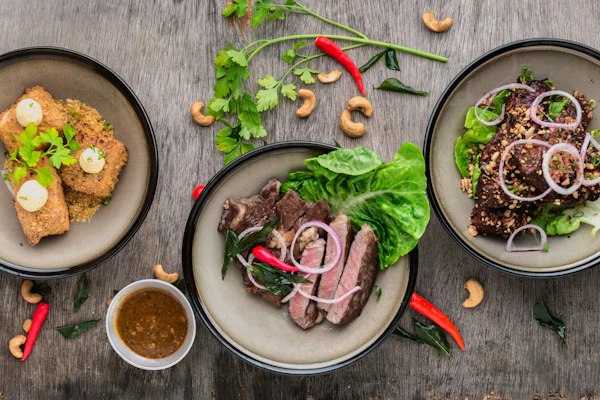
Phu Quoc's cuisine centers on the sea and the island's famous fish sauce (nuoc mam). The island produces Vietnam's finest fish sauce, aged in wooden barrels for years - visit a factory to taste the difference. Fresh seafood is king: grilled sea urchin, steamed flower crabs, and barbecued squid are must-tries. Bun Quay, the island's signature dish, features hand-stirred noodles in a rich seafood broth - find the best at Duong Dong night market. Raw herring salad (Goi Ca Trich) is a local delicacy, cured in lime juice with onion and peanuts. For breakfast, Banh Canh is a thick noodle soup with crab. Don't miss the night markets for the full seafood experience: choose your fish from ice displays and have it grilled on the spot. Pair with fresh coconut and Phu Quoc pepper - the island's other famous export, considered the best in the world.
From boutique hotels in historic buildings to beachfront resorts and traditional homestays, we help you find the perfect accommodation for your style.
Vietnamese Dong (VND). Cards accepted at resorts and restaurants. ATMs available in Duong Dong town.
Vietnamese. English widely spoken in tourist areas, resorts, and restaurants.
Standard travel vaccines. Mosquito repellent recommended, especially near jungle areas.

Highlights of Phu Quoc

Sao Beach

Sao Beach

Vietnam's most beautiful beach with powdery white sand and crystal-clear turquoise water, consistently ranked among Asia's finest beaches.
Sunset at Dinh Cau

Sunset at Dinh Cau

Watch the sky explode in colors from the famous rocky cape and temple, followed by fresh seafood at the adjacent night market.
Hon Thom Cable Car

Hon Thom Cable Car

The world's longest over-sea cable car (7.9km) offers breathtaking views connecting Phu Quoc to the southern islands and Sun World complex.
Snorkeling Paradise

Snorkeling Paradise

Explore vibrant coral reefs and tropical fish around the An Thoi archipelago - Vietnam's premier snorkeling and diving destination.
Pepper Plantations

Pepper Plantations

Discover why Phu Quoc pepper is world-famous with tours of organic farms where you can taste and buy the island's spiciest export.

Other similar destinations

Discover more amazing places in the region.

Why travel to Phu Quoc with Banh Mi Escape Travel

Resort Expertise: We know every beach and property - from budget bungalows to luxury villas, we match you to your perfect stay.

Island Insider Access: Private boat charters, hidden beaches, and fishing village visits tourists never find on their own.

Seamless Transfers: Airport pickup, inter-beach transport, and island-hopping logistics all arranged seamlessly.

Seasonal Savvy: We know which beaches are best each month, avoiding monsoon-affected areas while maximizing your sun time.

24/7 Concierge: Restaurant reservations, spa bookings, and sunset cruise arrangements - we handle every detail.

Call us

+84 966 680 323

Write to us

info@ckgo2.cz

Visit us

Petrolimex Building, No.02 Ba Thang Hai Street, Danang