BESTSELLER: Sapa Trekking Adventure - Book Now!
Banh Mi
Hue

Vietnam's Imperial Soul

Hue: Imperial City of Vietnam

Hue is a historic city in central Vietnam and the former seat of the Nguyen dynasty, which ruled unified Vietnam from 1802 to 1945. The city's extraordinary complex of imperial monuments, including the massive Citadel, royal tombs, and sacred pagodas along the Perfume River, earned it UNESCO World Heritage status and make it one of the most culturally significant destinations in Southeast Asia.

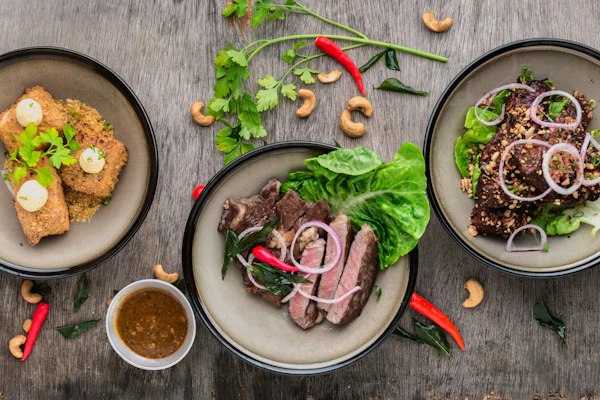
But Hue is far more than a museum city. It is also one of Vietnam's greatest food destinations, with a culinary identity built around imperial court cuisine traditions and a vibrant street food culture that includes Bun Bo Hue, banh beo, banh khoai, and dozens of other dishes you will not find prepared the same way anywhere else.

The city's quieter pace, its river setting, the Dong Ba Market, the incense-making villages, and the famous scenic train route across the Hai Van Pass to Da Nang all contribute to making Hue a destination that rewards travellers who stay long enough to experience its deeper rhythms. Hue is where Vietnamese history, food, and a distinctive sense of place come together most powerfully.

Google Reviews

4.9
Read all reviews

Recommended trips to Hue

Small group trips, thoughtful itineraries, quality guides and experiences confirmed by client reviews.

Contact our specialists

We're happy to answer all your questions and help you choose

BMT

Banh Mi Escape Travel

All destinations

+84 966 680 323

info@banh-mi-escape.com

View all contacts
Nguyen Thi Mai

Nguyen Thi Mai

Vietnam specialist

+84 966 680 323

mai@banh-mi-escape.com

Contact
Tran Van Minh

Tran Van Minh

Adventure specialist

+84 966 680 323

minh@banh-mi-escape.com

Contact

Get inspired

Watch our videos and become part of the adventure.

Weather

Best time to visit: January to April, with March and April usually the best balance of dry weather and manageable heat. The rainy season peaks September to November with heavy rainfall, especially October and November.

Climate: Tropical monsoon climate with hot, humid summers and a distinct wet season from September to January. The driest and most comfortable months are February to April. Hue receives more rainfall than most Vietnamese cities.

Best months to visit this destination

Best
Good
Off-season

Current weather in Hue for selected month

Active month: May

<p>Hue has a tropical monsoon climate and is one of the wettest cities in Vietnam. The best weather is from January to April, with drier conditions and comfortable temperatures for sightseeing. Summer (May-August) is hot and humid but generally dry. The heavy rainy season runs from September to November, with October and November receiving the most rainfall. Pack layers for cooler winter evenings.</p>

Air temperature

30 °C

Water temperature

°C

Hue - Photo 1
1/10

Experience Hue

Walk through Vietnam's imperial history, taste the country's most distinctive food culture, and discover the soul of central Vietnam.

Plan Your Trip
Philippe & Marie, France

Philippe & Marie, France

Hue surprised us completely. We came for the Citadel but stayed for the food. The bun bo alone was worth the trip, and the royal tombs were some of the most beautiful places we visited in all of Vietnam.

FAQ & Useful tips

E-visa available for most nationalities (30-90 days). Apply online at least 5 business days before travel.
ICT (UTC+7). Vietnam uses a single timezone across the country.
220V, 50Hz. Type A, C, and G plugs. Adapters recommended for European/UK plugs.

Hue is widely regarded as one of Vietnam's greatest food cities, with a culinary tradition deeply influenced by the imperial court and a street food culture that is among the most varied and distinctive in the country.

The signature dish is Bun Bo Hue, a rich, spicy beef noodle soup with a forceful broth character that is quite different from pho. But Hue's food identity goes far beyond this one famous export. Com hen and bun hen (baby clam rice and noodles) are beloved local staples, while the city's constellation of small "banh" dishes - banh beo, banh nam, banh loc, and banh khoai - showcase the imperial tradition of refined, bite-sized preparations.

Nem lui (grilled pork on lemongrass skewers), Hue-style che (sweet dessert soups), and the food stalls around Dong Ba Market complete a food scene that rewards dedicated eating across multiple meals and locations.

From boutique hotels in historic buildings to beachfront resorts and traditional homestays, we help you find the perfect accommodation for your style.
Vietnamese Dong (VND). ATMs widely available. USD accepted in some tourist areas.
Vietnamese. English spoken in tourist areas, hotels, and restaurants.
No mandatory vaccinations. Recommended: Hepatitis A & B, Typhoid, Tetanus. Consult your doctor before travel.
For most travellers, the best window is January to April, with March and April often feeling like the safest balance of dry weather, manageable heat and good conditions for walking the Citadel, visiting royal tombs and eating outdoors. Hue is much easier in this period than in the heavy-rain months later in the year.
The most difficult stretch is usually September to November, especially October and November, when rain can be heavy enough to disrupt sightseeing and make the city feel much slower and less practical.
For most people, 2 days / 2 nights is the right amount. One day is enough to see the highlights. Two days is enough to understand why Hue matters: one day for the imperial core, another for tombs, food and a more local layer.
Hue is much better as a proper stay. If you only stop for a few hours, you get monuments. If you stay overnight, you get the city's pace, food, river atmosphere and a sense of why it feels so different from Hoi An or Da Nang.
Late winter to spring is usually the strongest combination. You get easier heritage visits, better walking conditions and a much more comfortable version of Hue's street food and market life.
The three main options are private car, train, and bus/shuttle. A private car is easiest for flexibility and hotel-to-hotel convenience. The train is the most scenic. The bus is the budget choice, but not usually the most memorable one.
It is the Hue-Da Nang train across the Hai Van Pass, one of the best-known rail stretches in Vietnam. The line runs between jungle-covered slopes and the sea, making it one of the most magical sections of the Hanoi-Saigon journey.
If your priority is scenery, the train is better. If your priority is flexibility, a private car wins because you can stop along the route and control your timing. The train is the one you choose when the transfer itself is part of the experience.
Yes. Hue sits on Vietnam's main north-south rail line, so overnight sleeper trains to Hanoi are a standard and practical option for travellers who prefer overland travel to flying.
Take the train if you enjoy long overland journeys and want the transfer to feel like part of the trip. Take the plane if your priority is speed and simplicity. The overnight train is absolutely workable, but it is still a long journey.
The core list is clear: the Imperial City, one or two royal tombs, Thien Mu Pagoda, and then one everyday-city layer such as Dong Ba Market or the Perfume River area. That is the strongest first-time version of Hue.
If you only have one day, do it in this order: Imperial City in the morning, one or two selected tombs in the afternoon, then Hue food in the evening. That gives you the city's strongest historical axis without making the day collapse under too much transport.
Yes, especially if you want Hue to feel like a real city rather than only a UNESCO site. Dong Ba gives you market life, local food and a more everyday version of Hue.
The best additions are Thien Mu Pagoda, the Perfume River, Dong Ba Market, and one local craft stop such as Thuy Xuan incense village. These are the places that stop Hue from feeling too narrow or too purely historical.
Hue is quieter, more historical and more inward-looking. Hoi An is easier to enjoy immediately. Da Nang is easier to use. Hue is the deeper stop if you care about imperial history, food and a city with a slower pulse.
The Imperial City is the heart of old imperial Hue and the main reason the city's monument complex is UNESCO-listed. It is a major expression of Vietnamese feudal planning and symbolic landscape design along the Perfume River.
Give it at least 2 to 3 hours. Less than that turns it into a photo stop, which is exactly the wrong way to do Hue. The Citadel needs time because it is the city's main historical anchor, not just one attraction among many.
For most travellers, the strongest shortlist is Minh Mang, Tu Duc and Khai Dinh. You do not need all three. Two is usually enough, especially if you choose contrasting styles instead of trying to cover everything.
Yes, but only if you stay selective. One morning in the Citadel plus one or two tombs is a strong day. Trying to do more usually turns into a transport-heavy schedule with too little time on site.
The most practical option is car with driver, taxi or a structured route. The tombs are outside the core city area, and Hue's heat can make a badly planned day feel much longer than it should.
Hue is famous for Bun Bo Hue, but that is only the beginning. The city is also known for com hen, bun hen, banh beo, banh nam, banh loc, banh khoai, nem lui and Hue-style che. This is one of Vietnam's strongest and most clearly defined regional food cultures.
Bun Bo Hue is Hue's signature noodle soup: richer, stronger and usually spicier than pho, with a much more forceful broth character. It is one of the city's defining dishes, not just a famous export.
Go straight to com hen or bun hen, then move into the smaller dishes: banh beo, banh nam and banh loc. These are the dishes that really explain Hue's identity because they show its imperial and snack-meal traditions far better than one famous soup alone.
Yes. Hue has been placed among notable global food destinations, with dishes such as bun bo Hue, nem lui, banh beo and banh khoai specifically praised. Independent food writing also treats Hue as one of the country's most distinctive culinary cities.
A strong answer is Dong Ba Market and the area around it, especially if you want to combine food with a more everyday city feeling. The Dong Ba zone is not just a market stop but a real food layer of the city.
They go where food, market life and river-side city rhythm still feel natural rather than staged - places like the Dong Ba area, smaller food streets and local cafes rather than only the formal heritage core. Hue's evening identity is quieter than Hoi An's but stronger than many visitors expect once they follow the food instead of only the monuments.
The better strategy in Hue is often not one "famous restaurant" but following the dishes themselves: bun bo, hen dishes, nem lui, the smaller "banh" dishes, and market-area stalls that locals keep busy.
The areas around Dong Ba Market, everyday food streets and the river-adjacent neighbourhoods outside the formal imperial core tend to feel more lived-in. These are the parts of Hue that turn the city from a heritage site into an actual place.
Eat properly, go to a market, stop for coffee, and add one smaller local layer such as Thuy Xuan incense village or a slower riverside stretch. Hue improves when the trip stops being only about royal monuments.
Dong Ba Market is the obvious answer. It works because it gives you both food and daily city life, not only shopping or sightseeing.
The DMZ trip from Hue is a full-day historical excursion into Quang Tri Province, focused on sites linked to the former Demilitarized Zone during the Vietnam War. It is one of the most established war-history day trips from Hue.
Expect a serious history day rather than a scenic excursion. The most common stops include Hien Luong Bridge, the Ben Hai River and Vinh Moc Tunnels, sometimes with additional war-related sites in Quang Tri.
Yes. The DMZ route makes the most sense for travellers who want wartime context and are willing to spend a full day outside Hue on a history-heavy excursion.
Good extensions include Thuy Xuan incense village, river-based experiences, and the scenic Hue-Da Nang route via Hai Van, whether by train for the views or by car for flexibility.
The best Hue trip combines the Citadel, one or two tombs, strong local food, and one slower local experience. That is when Hue stops feeling like a history lesson and starts feeling like a real place.

Highlights of Hue

Imperial Citadel

The heart of old imperial Hue, a vast UNESCO-listed walled complex modelled after Beijing's Forbidden City, with palaces, gardens, and the Purple Forbidden City.

Royal Tombs of the Nguyen Dynasty

Architecturally stunning mausoleums set in gardens outside the city, each reflecting the personality of its emperor. Minh Mang, Tu Duc, and Khai Dinh are the most impressive.

Thien Mu Pagoda

Hue's most iconic pagoda perched above the Perfume River, with a seven-storey tower dating to 1844 and deep spiritual significance in Vietnamese history.

Hue's Legendary Food Scene

One of Vietnam's strongest culinary cities, famous for Bun Bo Hue, com hen, banh beo, banh khoai, nem lui, and dozens of imperial-influenced dishes.

Dong Ba Market

Hue's central market offering local food stalls, everyday city life, and a much more authentic atmosphere than the formal heritage sites.

Hai Van Pass Scenic Route

The famous mountain pass between Hue and Da Nang, best experienced by the iconic coastal train line considered one of the world's most beautiful rail journeys.

Other similar destinations

Discover more amazing places in the region.

Why travel to Hue with Banh Mi Escape Travel

Deep knowledge of Hue's food scene, from the best bun bo stalls to hidden banh beo spots locals love

Expertly paced heritage itineraries that balance the Citadel, tombs, and everyday city life

Scenic transport planning including the iconic Hue-Da Nang train and Hai Van Pass options

Accommodation in riverside locations that capture Hue's distinctive slow-paced atmosphere

Optional DMZ day trip with knowledgeable historical context for war-history travellers

Call us

+84 966 680 323

Write to us

info@ckgo2.cz

Visit us

Petrolimex Building, No.02 Ba Thang Hai Street, Danang