BESTSELLER: Sapa Trekking Adventure - Book Now!
Banh Mi
Ha Giang

Vietnam's Final Frontier

Ha Giang: Mountains and Adventure in Vietnam

Ha Giang is a remote and extraordinary region in the far north of Vietnam, home to some of the country's most dramatic landscapes and richest ethnic minority cultures. The province centres on the Dong Van Karst Plateau, a UNESCO Global Geopark of towering limestone formations, deep river canyons, and mountain passes that rank among the most spectacular road journeys in Southeast Asia.

The famous Ha Giang Loop takes travellers through a succession of breathtaking landscapes: the Heaven Gate viewpoint at Quan Ba, the historic Dong Van Old Quarter, the legendary Ma Pi Leng Pass, and the turquoise Nho Que River cutting through the Tu San Canyon far below. Along the way, ethnic minority villages, highland markets, and a way of life shaped by centuries of mountain farming create a cultural dimension that makes Ha Giang far more than just a scenic drive.

Whether experienced by car with driver, easy rider, or motorbike, the Ha Giang Loop is widely regarded as one of the most powerful travel experiences in Vietnam. It is a place where the journey itself is the destination, and where the mountain landscapes stay with you long after you leave.

Google Reviews

4.9
Read all reviews

Recommended trips to Ha Giang

Small group trips, thoughtful itineraries, quality guides and experiences confirmed by client reviews.

No trips available yet

We're currently preparing exciting trips to Ha Giang. Contact us to be notified when new trips become available.

Contact Us

Contact our specialists

We're happy to answer all your questions and help you choose

BMT

Banh Mi Escape Travel

All destinations

+84 966 680 323

info@banh-mi-escape.com

View all contacts
Nguyen Thi Mai

Nguyen Thi Mai

Vietnam specialist

+84 966 680 323

mai@banh-mi-escape.com

Contact
Tran Van Minh

Tran Van Minh

Adventure specialist

+84 966 680 323

minh@banh-mi-escape.com

Contact

Get inspired

Watch our videos and become part of the adventure.

Weather

Best time to visit: March to May and September to November. Spring brings flowers and fresh mountain scenery. Autumn offers golden rice terraces and clear views. The buckwheat flower season (October-November) is a distinctive draw.

Climate: Mountain climate with significant variation by altitude. Summers are green and dramatic but rainy. Winters are cold and dry with possible frost at high elevations. Spring and autumn are the most comfortable for travel.

Best months to visit this destination

Best
Good
Off-season

Current weather in Ha Giang for selected month

Active month: May

<p>Ha Giang has a mountain climate with significant seasonal variation. Spring (March-May) and autumn (September-November) offer the best conditions with comfortable temperatures, clearer skies, and the most photogenic landscapes. Summer brings lush green scenery but also heavy rain and reduced visibility. Winter can be quite cold at higher elevations, with occasional frost and fog. Pack layers regardless of season, as mountain temperatures can drop significantly at night.</p>

Air temperature

25 °C

Water temperature

°C

Ha Giang - Photo 1
1/10

Journey Through Ha Giang

Experience Vietnam's most dramatic mountain roads, ancient karst plateaus, and remote ethnic minority villages on the legendary Ha Giang Loop.

Plan Your Trip
James & Lucy, Australia

James & Lucy, Australia

Ha Giang was the most incredible road trip of our lives. The Ma Pi Leng Pass took our breath away, and staying with a Hmong family in Lo Lo Chai was a deeply moving experience we will never forget.

FAQ & Useful tips

E-visa available for most nationalities (30-90 days). Apply online at least 5 business days before travel.
ICT (UTC+7). Vietnam uses a single timezone across the country.
220V, 50Hz. Type A, C, and G plugs. Adapters recommended for European/UK plugs.

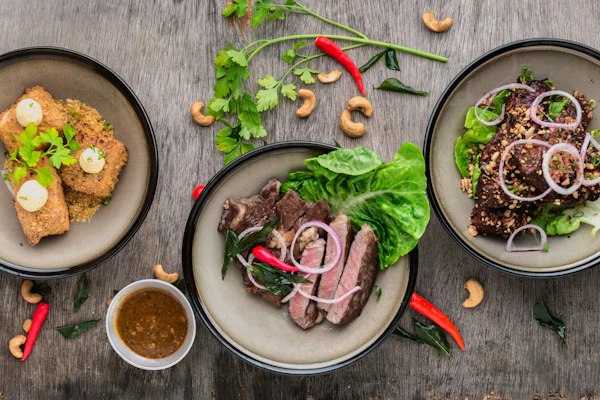
Ha Giang's food is mountain cuisine shaped by highland farming, ethnic minority traditions, and the harsh but beautiful landscape. It is simple, hearty, and unlike anything in lowland Vietnam.

The most distinctive dish is thang co, a traditional Hmong horse meat and organ hotpot served at highland markets and local restaurants. Men men, a corn-based staple made from ground maize, reflects the plateau's agricultural traditions and is unique to this region.

Other local specialities include chao au tau (aconite root porridge, a warming mountain dish), banh cuon (steamed rice rolls), buckwheat products during the tam giac mach flower season, and locally distilled corn wine. Food in Ha Giang is best experienced at markets and homestays along the loop, where meals are prepared by local families using ingredients from the surrounding mountains.

From boutique hotels in historic buildings to beachfront resorts and traditional homestays, we help you find the perfect accommodation for your style.
Vietnamese Dong (VND). ATMs widely available. USD accepted in some tourist areas.
Vietnamese. English spoken in tourist areas, hotels, and restaurants.
No mandatory vaccinations. Recommended: Hepatitis A & B, Typhoid, Tetanus. Consult your doctor before travel.
For most travellers, the strongest periods are March to May and September to November. Spring is good for flowers, fresher mountain scenery and easier trekking, while autumn is the classic time for golden rice terraces, clearer views and the most photogenic version of the plateau.
If your goal is the classic golden-terrace look, aim for September to early October, especially in areas such as Hoang Su Phi and along parts of the loop where terraced fields are still a major part of the landscape.
The main flower season is usually January to March for plum and peach blossoms, then October to December for buckwheat flowers. The buckwheat bloom is one of the province's most distinctive seasonal draws, especially in October and November.
Summer is very green, dramatic and more unpredictable. This is when mountain roads, valleys and rivers feel most alive, but it is also the season of heavier rain, lower visibility on some days and more changeable conditions for road travel. It can still be beautiful, but it needs more flexibility than spring or autumn.
Winter is colder, drier and often much barer, with fog and low temperatures shaping the experience. It is less about soft green scenery and more about raw rock, high passes, stark plateau landscapes and mountain atmosphere. For some travellers, that is exactly the appeal.
Most travellers first go from Hanoi to Ha Giang city, usually by overnight bus or limousine van, then start the mountain part of the trip from there. The loop itself begins properly once you are already in Ha Giang province.
For most travellers, the best practical option is an overnight sleeper bus or a more comfortable limousine van from Hanoi to Ha Giang city. A private car makes sense if you want full control or are travelling as a couple or small group, but it is not the default choice for most first-time visitors.
Yes. This is one of the most important things for international travellers to understand. You do not have to self-ride the loop. You can join the route by car, or do it with an easy rider if you want the mountain-road experience without being responsible for the riding yourself.
For most people, one night in Ha Giang city before the loop makes the most sense. It lets you rest after the Hanoi transfer, organise your route, and start the mountain section properly the next morning instead of arriving tired and rushing straight into the high roads.
The Ha Giang Loop is the mountain road circuit that takes travellers through the province's most famous highland landscapes, especially the Dong Van Karst Plateau, Ma Pi Leng Pass, Meo Vac, Yen Minh, Quan Ba and related routes. It is a travel pattern built around the province's most dramatic mountain corridors.
For most first-timers, the classic route is the most sensible: Ha Giang city to Quan Ba to Yen Minh to Dong Van to Ma Pi Leng to Meo Vac and return. This gives you the signature plateau, pass and river-view experiences without overcomplicating the first trip.
Yes, if you have more than the shortest version of the trip. Du Gia changes the feel of the route: it adds a softer, greener and more village-based layer after the dramatic rock plateau sections.
For most travellers, 3 to 4 days is the right amount. Three days gives you the classic version. Four days gives you more room for Du Gia, slower village time or better pacing between the major mountain sections.
The classic high-value stops are Quan Ba Heaven Gate / Twin Mountains, Yen Minh, Sung La, the Vuong family residence, Dong Van Old Quarter, Ma Pi Leng Pass, the Nho Que River / Tu San Canyon area, and Meo Vac.
If you want the short version, do not miss Ma Pi Leng Pass, the Nho Que River, the Dong Van Karst Plateau, Lung Cu, Sung La, and at least one village or cultural stop beyond the big viewpoints.
Because it is the signature road section of Ha Giang: a high pass on the Happiness Road between Dong Van and Meo Vac, with deep limestone scenery and views down toward the Nho Que River. It is one of the great mountain-pass experiences in northern Vietnam.
Yes. It is one of the strongest experiences in the province because it gives you something different from the road: instead of looking down into the gorge from above, you experience the landscape from the river itself.
There is no single answer, but the strongest famous viewpoints are around Ma Pi Leng, Quan Ba Heaven Gate, Lung Cu, and the higher sections of the Dong Van Karst Plateau. These places show different versions of Ha Giang - steep rock, borderland scale, valleys and passes.
Choose the classic loop by car or easy rider, with a focus on Ma Pi Leng, Nho Que, Dong Van and Lung Cu, rather than building the trip around harder trekking zones. Ha Giang can absolutely work as a scenic road journey without being a physically extreme trip.
Yes, very much. In Ha Giang, markets are not just commercial spaces; they are also social and cultural gatherings where ethnic communities meet, trade, eat and maintain traditions. That is why they matter far more than "shopping" in the usual tourist sense.
The most famous is Khau Vai Love Market in Meo Vac. It is not an everyday market. It is a cultural event held once a year, traditionally on the 27th day of the third lunar month, and is strongly tied to local folklore, former lovers meeting again, and ethnic cultural performance.
It is special because it is not only about trade. It is a cultural meeting tied to memory, old relationships and highland identity. It is worth planning around only if your dates match; it is not something you can drop into at any time of year.
For first-time travellers, strong village additions include Lo Lo Chai near Lung Cu, Sung La, and village-based stays around the loop that let you experience the plateau beyond the road itself.
Ha Giang is not only dramatic scenery. It is one of Vietnam's most culturally layered mountain provinces, with strong ethnic minority traditions, festivals, clothing, village architecture and local forms of music and ritual. Culture is one of the main reasons the province stands out, not just a backdrop to the road trip.
The best structure is contrast. If one day is about the classic plateau and pass, the next should add either a village stay, Du Gia, or a deeper cultural stop, instead of simply chasing more viewpoints. That is what makes Ha Giang feel like a real journey rather than only a road loop.
Do not reduce it to a "quick loop." Add at least one village-based or less obvious stop, leave time for the river as well as the pass, and avoid turning every stop into a photo-only pause. Ha Giang gets much better when the trip includes both the famous road and the life around it.
Trying to treat it like a standard scenic drive and underestimating how much the experience depends on pace, weather, road time and route choice. Ha Giang is strongest when you choose a realistic route and let the mountain rhythm shape the trip instead of trying to over-complete it.
Try at least one proper market experience, one village stay or village visit, and local dishes such as thang co, men men, chao au tau, banh cuon or tam giac mach products, depending on where you stop on the route.
The best Ha Giang trip combines the loop, Ma Pi Leng and Nho Que, one meaningful market or village layer, and enough time to let the province feel inhabited rather than just photographed. That is when Ha Giang stops being only a beautiful road and becomes one of the most distinctive travel experiences in Vietnam.

Highlights of Ha Giang

Ma Pi Leng Pass

Vietnam's most famous mountain pass on the Happiness Road, with vertiginous views over the Nho Que River gorge and limestone towers between Dong Van and Meo Vac.

Dong Van Karst Plateau Geopark

A UNESCO Global Geopark of ancient limestone formations, dramatic valleys, and one of the most geologically significant karst landscapes in Southeast Asia.

Nho Que River & Tu San Canyon

A turquoise river winding through one of Vietnam's deepest canyons, experienced by boat or kayak far below the Ma Pi Leng road above.

Ethnic Minority Villages

Remote highland communities including Hmong, Tay, Dao, and Lo Lo peoples, with distinctive architecture, traditional clothing, and centuries-old cultural traditions.

Lung Cu Flag Tower

Vietnam's northernmost point at the Chinese border, marked by a tower flying the country's largest flag, representing all 54 ethnic groups.

Highland Markets

Weekly mountain markets where ethnic minority communities gather to trade, socialise, and maintain cultural traditions, especially the famous Khau Vai Love Market.

Other similar destinations

Discover more amazing places in the region.

Why travel to Ha Giang with Banh Mi Escape Travel

Safe, experienced car and easy rider options so you enjoy the scenery without the stress of mountain riding

Carefully paced 3-4 day itineraries that balance the famous viewpoints with village life and market visits

Authentic homestay connections in highland communities for genuine cultural exchange

Seasonal timing advice for rice terraces, buckwheat flowers, and the best mountain visibility

Support with the logistics of reaching Ha Giang and planning the loop route that fits your pace

Call us

+84 966 680 323

Write to us

info@ckgo2.cz

Visit us

Petrolimex Building, No.02 Ba Thang Hai Street, Danang