

BESTSELLER: Sapa Trekking Adventure - Book Now!
Banh Mi
Da Lat

City of Eternal Spring

Da Lat: Mountains and Cool Climate in Vietnam

Da Lat is a city in the central highlands of Vietnam known for its cooler climate, mountains, and natural scenery. It is different from other parts of Vietnam because of its fresh air and peaceful atmosphere. Visitors can enjoy nature, lakes, waterfalls, and outdoor activities.

Perched at 1,500 metres above sea level in the Langbiang highlands, Da Lat feels like a different country within Vietnam. Where the lowlands swelter, Da Lat offers cool mountain air, misty mornings, and evening temperatures that call for a light jacket -- a rarity in tropical Southeast Asia. This unique climate has shaped everything about the city, from its pine-forested hillsides and flower-covered streets to its thriving café culture and French colonial architecture.

Known as the 'City of Eternal Spring' and the 'City of Flowers', Da Lat is built around Xuan Huong Lake and surrounded by waterfalls, tea plantations, and vegetable gardens that supply much of southern Vietnam. The city's creative energy is palpable -- artisan coffee roasters, boutique guesthouses, and atmospheric night markets give Da Lat a youthful, artistic character that draws Vietnamese couples, digital nomads, and travellers seeking something completely different from the beach-and-city template.

Google Reviews

4.9
Read all reviews

Recommended trips to Da Lat

Small group trips, thoughtful itineraries, quality guides and experiences confirmed by client reviews.

No trips available yet

We're currently preparing exciting trips to Da Lat. Contact us to be notified when new trips become available.

Contact Us

Contact our specialists

We're happy to answer all your questions and help you choose

BMT

Banh Mi Escape Travel

All destinations

+84 966 680 323

info@banh-mi-escape.com

View all contacts
Nguyen Thi Mai

Nguyen Thi Mai

Vietnam specialist

+84 966 680 323

mai@banh-mi-escape.com

Contact
Tran Van Minh

Tran Van Minh

Adventure specialist

+84 966 680 323

minh@banh-mi-escape.com

Contact

Get inspired

Watch our videos and become part of the adventure.

Weather

Best time to visit: November to March (cool dry season) for the most pleasant temperatures and clearest skies. January-February brings mai anh dao cherry blossoms. October-November offers wild sunflower and pink grass seasons. The Da Lat Flower Festival (biennial) draws large crowds.

Climate: Subtropical highland climate with average temperatures of 18-24°C year-round -- significantly cooler than the rest of southern Vietnam. Light rain possible any time, heavier from May to October. Morning mist is common and adds to the romantic atmosphere. Pack layers; evenings can drop to 15°C or below.

Best months to visit this destination

Best
Good
Off-season

Current weather in Da Lat for selected month

Active month: May

<p>Da Lat's highland location at 1,500 metres creates a remarkably cool climate for tropical Vietnam, with average temperatures of 18-21°C year-round. The city earns its 'Eternal Spring' nickname with mild days and cool evenings that can drop to 15°C or below. The dry season from November to March offers the clearest skies and coolest temperatures, ideal for outdoor exploration. The wet season from May to October brings regular afternoon showers and atmospheric mist, giving the pine forests and lake a romantic quality. Pack layers -- Da Lat is the one place in southern Vietnam where you will genuinely need a jacket.</p>

Air temperature

21 °C

Water temperature

0 °C

Da Lat - Photo 1
1/10

Discover Da Lat

Vietnam's highland escape -- cool mountain air, flower-lined streets, artisan coffee, and a creative spirit that makes Da Lat feel like nowhere else in Southeast Asia.

Plan Your Trip
Travel Expert, Banh Mi Travel

Travel Expert, Banh Mi Travel

Da Lat completely changed my idea of what Vietnam could be. The cool air, the pine forests, the incredible coffee scene, and those misty mornings around the lake -- it felt like discovering a secret that locals have known about forever.

FAQ & Useful tips

E-visa available for most nationalities (30-90 days). Apply online at least 5 business days before travel.
ICT (UTC+7). Vietnam uses a single timezone across the country.
220V, 50Hz. Type A, C, and G plugs. Adapters recommended for European/UK plugs.

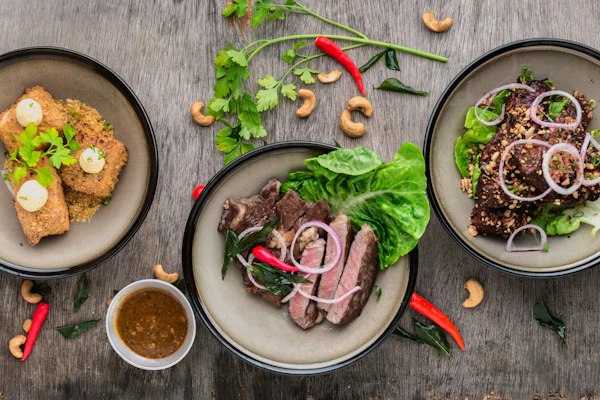
Da Lat's cool climate has created a food culture entirely distinct from the rest of southern Vietnam. The city is Vietnam's vegetable and flower capital, and this agricultural abundance shapes every meal -- from the freshest possible salads and avocados to strawberries, artichokes, and persimmons grown in the surrounding highlands.

The night market is the epicentre of Da Lat street food. Must-try dishes include banh trang nuong (Vietnamese pizza -- grilled rice paper with egg, spring onion, and dried shrimp), banh can (small savoury rice cakes cooked in clay moulds), and kem bo (avocado ice cream), a local obsession. Warm soy milk and grilled sweet corn are cold-evening staples.

Da Lat has emerged as one of Vietnam's premier coffee destinations, with artisan roasters and atmospheric hillside cafés that rival any specialty coffee scene in Asia. Locally grown Arabica beans thrive in the highland climate, and the city's café culture -- from minimalist design studios to pine-forest retreats -- is a destination experience in itself. Do not miss ca phe trung (egg coffee) served warm on a cool Da Lat evening.

From boutique hotels in historic buildings to beachfront resorts and traditional homestays, we help you find the perfect accommodation for your style.
Vietnamese Dong (VND). ATMs widely available. USD accepted in some tourist areas.
Vietnamese. English spoken in tourist areas, hotels, and restaurants.
No mandatory vaccinations. Recommended: Hepatitis A & B, Typhoid, Tetanus. Consult your doctor before travel.
For most travellers, the easiest overall period is late in the year through early spring, when Da Lat is cooler, drier and much better for walking, viewpoints, waterfalls and longer outdoor days. Vietnamese guides also consistently describe this as the period when the city feels most like the Da Lat people imagine: cold air, flowers, mist and clearer weather.
The wetter part of the year makes Da Lat greener, moodier and more cafe-friendly, but less reliable for packed sightseeing plans. Rain and mist can make the city atmospheric, especially in the pines and around the lakes, but it is a weaker season if your main priority is covering a lot of viewpoints and waterfalls efficiently.
Da Lat has flowers through much of the year, but some periods stand out more strongly. Early in the year is best for mai anh dao, while late in the year is better known for wild sunflower and pink grass season. That is one reason Da Lat changes so much depending on which months you choose.
Usually in the first part of the year, especially around late January into February, though the bloom can shift depending on weather. Vietnamese sources repeatedly note that this season is one of the city's most anticipated visual moments.
Wild sunflower season is usually late in the year, especially around October to November, when the rains begin to ease and the roads around Da Lat turn yellow. VnExpress highlights this as one of Da Lat's most recognisable late-year seasons.
Pink grass is usually a late-year experience, especially around November into early December. It is one of the more specific seasonal reasons people plan a Da Lat trip at that time.
Most visitors arrive by air through Lien Khuong Airport, which is the main gateway to Da Lat and Lam Dong. Vietnamese guides also note that road travel from Ho Chi Minh City remains common, but flying is the easiest option for most shorter itineraries.
Yes. That is one of the reasons it works so well as a short break or as part of a wider southern Vietnam route. It is close enough to be practical, but different enough in climate and atmosphere to feel like a real change of place.
Fly if you want the fastest and simplest arrival. Go by road if you like mountain approaches and do not mind a much longer transfer. For most international travellers with limited time, flying is the easier answer.
A strong first Da Lat trip usually combines the central lake area, one or two waterfalls, one flower or garden stop, one mountain or viewpoint area, and time in the pine-forest outskirts rather than only in the centre. Vietnamese guides consistently show that Da Lat works best as a mix of city atmosphere and surrounding nature, not as a single-sight destination.
For most first-time visitors, the strongest core is Xuan Huong Lake, Datanla Waterfall, Linh Phuoc Pagoda / Trai Mat direction, Cau Dat tea-hill side, and at least one flower-heavy or pine-forest experience outside the centre. That gives you the clearest first impression of what Da Lat actually is: cool-climate city, slopes, flowers and outer-city scenery.
Yes, it is worth including. The lake is not a 'headline attraction' in the usual sense, but it is one of the pieces that gives Da Lat its everyday rhythm. It works best as something you return to rather than something you 'tick off.'
Yes. Datanla is one of the easiest and most popular waterfall experiences around Da Lat, especially because it combines scenery with a more accessible format than some more remote waterfall stops. Vietnamese travel guides regularly keep it high on first-time Da Lat lists.
The Cau Dat side of Da Lat is one of the most useful outer-city directions because it combines tea-hill scenery, roads known for flower season, cooler open landscapes and a more spacious version of Da Lat beyond the centre. It is also one of the areas most often linked with wild sunflower and mai anh dao viewing in Vietnamese coverage.
That depends on the season, but Vietnamese sources specifically highlight roads and areas such as Le Dai Hanh, Tran Hung Dao, Truc Lam direction, Da Quy slope, and parts of Cau Dat / Trai Mat for major bloom periods, especially mai anh dao and late-year flower routes.
The best answer is to go outward: tea hills, flower roads, pine-forest areas, waterfalls and the broader Ta Nung / Cau Dat / Trai Mat directions, depending on your style. Da Lat is much better once you stop treating it as only a compact city centre.
For most travellers, 2 to 3 days is a very good first stay. That gives you enough time for city atmosphere, one or two nature days, and one seasonal or flower-focused layer if the timing is right.
The biggest tourism-facing event is the Da Lat Flower Festival. It is the city's best-known public festival and the clearest expression of Da Lat's flower identity on a city-wide scale.
Yes -- if you want Da Lat at its most event-driven and decorative. The festival brings floral displays, public programs and a much stronger sense of celebration, but the trade-off is a busier city and a less calm version of Da Lat.
The strongest alternatives are mai anh dao season early in the year, wild sunflower season later in the year, and pink grass season toward the end of the year. Those are often just as important to travellers as the formal festival itself.
Plan Da Lat around season and mood, not only around attractions. It works best when you combine one or two real scenic anchors with slower time for cafes, flower roads, walks and weather changes. The city is much stronger that way than as a packed 'check-in' itinerary.
Ignoring the season. In Da Lat, the difference between flower bloom, dry cool weather, rain, mist, wild sunflower season or pink grass season changes the trip more than in many other Vietnamese destinations.
The best Da Lat trip combines cool climate, seasonal colour, outer-city scenery, and enough unhurried time to enjoy the city's slower rhythm. That is what turns Da Lat from a photogenic stop into a place people genuinely remember.

Highlights of Da Lat

Xuan Huong Lake

The crescent-shaped lake at the heart of Da Lat, surrounded by pine trees, flower gardens, and colonial-era buildings. Morning walks along its shore reveal the city's gentle rhythm, while evening lights reflect beautifully on the water. The lake is Da Lat's emotional anchor.

Datanla Waterfall

The most accessible of Da Lat's waterfalls, featuring a three-tiered cascade cutting through dense forest just 5 km from the city centre. A fun alpine coaster ride takes visitors down to the falls, combining natural beauty with a touch of adventure.

Crazy House (Hang Nga Guesthouse)

An extraordinary piece of organic architecture designed by Vietnamese architect Dang Viet Nga, resembling a giant tree with winding staircases, cave-like rooms, and bridges connecting surreal structures. It is one of Vietnam's most unique and photographed buildings.

Cau Dat Tea Hills

Rolling hills carpeted with vibrant green tea plantations about 25 km from the city centre. The Cau Dat area offers some of Da Lat's most photogenic landscapes, especially during flower seasons when wild sunflowers and cherry blossoms line the roads.

Linh Phuoc Pagoda

An ornate Buddhist pagoda in the Trai Mat area, famous for its intricate dragon sculptures made from thousands of broken glass and ceramic pieces. The 37-metre-tall Dai Hong Chung bell tower is a local landmark visible across the surrounding hills.

Da Lat Night Market

A bustling evening market in the city centre offering local street food, warm soy milk, grilled corn, pizza-style Vietnamese crepes (banh trang nuong), artisan goods, and a lively atmosphere that captures Da Lat's youthful creative energy.

Other similar destinations

Discover more amazing places in the region.

Why travel to Da Lat with Banh Mi Escape Travel

Season-timed itineraries that match your visit with cherry blossoms, wild sunflowers, or pink grass

Curated café and food routes that go far beyond the tourist circuit

Expert knowledge of the best viewpoints, flower roads, and hidden highland spots

Seamless logistics from Ho Chi Minh City by flight or scenic overland route via Mui Ne

Balanced itineraries mixing nature, culture, and the creative city atmosphere that makes Da Lat special

Call us

+84 966 680 323

Write to us

info@ckgo2.cz

Visit us

Petrolimex Building, No.02 Ba Thang Hai Street, Danang